Categories
Uncategorized

What Are the Main Emotions Associated with Grief?

17th September 2021

When you experience a loss of some kind, it is assumed that you will feel certain emotions associated with grief. The common idea is that people go through five clear stages of grief – denial, anger, bargaining, depression, acceptance – but this is not always the case. While these emotions do often occur, you may not experience all of them, nor do they happen in a linear fashion or during a particular time-frame. You may experience different feelings to the ones that are normally attributed to grief, and that is okay.

To give you a clearer understanding of this difficult subject ahead of receiving bereavement counselling in Harrogate or online, this blog walks you through a few of the emotions you might be feeling following a loss.

 Depression/Sadness

Depression is a natural response to grief and manifests itself in various ways. This could include feelings of lethargy, hopelessness, confusion, or an overall heaviness that prevents you from going about daily activities. It is an extremely common aspect of grief, and it can feel overwhelming. Managing these feelings alone is difficult, which is why bereavement counselling in Harrogate and online can serve as an important place to process these feelings and move past them.

Anger/Resentment

Sometimes, the bottled-up emotion that follows a loss comes out as anger. This is a common way of hiding the pain that you carry. Many people struggle to articulate their emotions, and as a result it comes out as anger or resentment. It could be directed at all kinds of people in your life – friends, family, your ex, work colleagues, or even the person who died. The latter is often the case in the event of a suicide. This aspect of grief, although unpleasant for all involved, is a normal and understandable part of the long process of dealing with difficult emotions.

Guilt

Guilt shows up frequently following the loss of a loved one. People will often feel like a bereavement is somehow their fault, that they could have done more somehow. In almost all cases, the death of a loved one is something you have no control over, but accepting this inability to influence a situation is not easy. We often place ourselves at the centre of a situation in order to make sense of it, even when it doesn’t involve us at all. Doing this is natural; it is a common response to the painful fact that we are bound to encounter difficult moments over which we have no control.

Numbness

Sometimes, following a bereavement, a person will feel nothing at all. At a time when you are expected to be feeling all kinds of emotions, it can be difficult to confront the fact that you feel blank, but this phenomenon happens a great deal. It is evidence that painful emotions do not always show up immediately. You might feel normal for a year, or even 10 years, and then suddenly be besieged by difficult emotions a long time after the event itself. We all process losses in a different way, and during different time-frames. There is no right or wrong time to grieve, so don’t feel bad if you experience a dearth of emotion in the wake of a loss.

Relief

If a loved one has been ill for some time, you may feel like a weight has been lifted after their passing. The person may have been suffering, or you could have had a difficult relationship with them. We hold a great deal of pent-up emotion when having to look after a loved one who is ill, and when they do pass, that emotion gets released and manifests itself as relief. This kind of response happens often, and it does not mean you didn’t love or care for the person who has passed away.

If you are feeling any of the above emotions following the loss of a loved one, you might benefit from seeing a bereavement counsellor in Harrogate or online. Feel free to get in touch with me to ask any questions you may have about counselling.


 

Categories
Uncategorized

How Do I Know If Remote or In-Person Counselling is Better for Me? 

3rd September 2021

As we come out of COVID-19 lockdown restrictions, you have the choice of coming to my practice in Harrogate or doing sessions online. And if you are seeking bereavement counselling for the first time, you may be unclear about which format is best suited to your needs.

To help you arrive at a decision that is right for you, this blog post outlines the key reasons why someone might choose either remote or in-person counselling.

Remote Counselling

Following a bereavement, it is natural to feel anxious, withdrawn, fragile, or simply uncomfortable with the confrontational aspect of sitting across from a professional counsellor. The prospect of going to a practice may feel like too much at the moment. In this instance, speaking to a counsellor online would be preferable, as this format enables you to talk through your issues from a place where you feel comfortable.

Remote counselling also saves you from travel expenses and gives you greater privacy. You might not want others to be aware you are seeing a counsellor and have an absolute guarantee that only your counsellor knows you are getting help.

More generally, receiving bereavement counselling remotely means you can be more flexible with your timings, giving you more room to do things at your own pace. It is a good place to start if you feel anxious about bereavement counselling. You can then progress to in-person counselling if it feels right later on.

In-Person Counselling

Remote counselling may be helpful for those who feel uncomfortable in a new public setting, but for others, in-person counselling might provide a reliable safe space for people whose home life is not peaceful. It may be that your home environment reinforces certain challenging feelings of grief, meaning my private practice in Harrogate can act as a sanctuary for you. Visiting the same place every week can act as a reference point that keeps you grounded during a time of crisis, playing an important role in your progression towards a place of acceptance.

Many prefer in-person counselling due to the deeper relationship they build with their bereavement counsellor. Not everyone can feel capable of voicing their true feelings online, whereas being in the same room can forge a closer connection between you and the counsellor. Having that sense of comfort during bereavement counselling is crucial, as it means you are more prepared to honestly vocalise and make sense of difficult emotions, thereby enabling you to move past them faster.

Still unsure about whether you would prefer to receive bereavement counselling in Harrogate or online? If so, feel free to give me a call to ask any further questions you have. 


Categories
Uncategorized

When Is the Right Time to See a Bereavement Counsellor?

26th August 2021

After losing a loved one, it is likely that you will feel many challenging and complex emotions. Grief affects people in different ways, and I understand that making sense of these new and painful feelings takes time. The next step could be to speak with a professional bereavement counsellor in Harrogate or online, as this gives you a safe, friendly, confidential space to explore these feelings in your own time.

However, if you have never had bereavement counselling before, you might be asking yourself: when is the right time to reach out? This is a challenging question for people experiencing feelings of loss. When exactly you should start that process of speaking to a professional is not clear, and varies from person to person. This blog post is therefore here to give you a few pointers about when it might be best to speak with a bereavement counsellor in Harrogate or online.

Don’t Go Immediately

It is a common reflex to seek bereavement counselling immediately after losing a loved one. The emotions are so raw and painful at this stage, and it is normal to feel like you should reach out for help. However, having bereavement counselling straight after a loss is not the best idea, as you haven’t had a chance to properly explore the loss and process the feelings associated with grief.

It is a deeply challenging time, but the healthiest thing to do is let yourself experience the emotions that come up, however painful they may be. After around three months, you will have a greater understanding of how these emotions play a role in your life, at which point you could benefit from talking them through with a bereavement counsellor in Harrogate or online.

Every Situation is Different

Grief is commonly understood as a process of five separate stages – denial, anger, bargaining, depression, acceptance – but this is not how grief works at all. People do not always experience these stages in linear fashion, nor do people necessarily experience all of them, or even any of them. Every loss brings out a different reaction from every person, which means there is no singularly correct time to seek help from a bereavement counsellor.

Some people may never need to speak with a bereavement counsellor. Others could feel numb for a month before suddenly experiencing immense feelings of guilt or anger, at which point they might feel like they need to speak with a bereavement counsellor. Parents who have lost a child may differ in when, or if, they seek counselling to talk through their loss. The question of when you see a bereavement counsellor, if at all, is therefore determined by the way you experience the loss in question.

It’s Never Too Late to Receive Bereavement Counselling

As I have seen personally, many people come to me 10 or 20 years after a bereavement occurs. They may have got on with their lives for many years, only to then encounter extremely painful feelings of grief all of a sudden, and seek out help as a result. This may seem strange, but it is very common – a typical characteristic of grief. It hits you in many different ways, and at any time – no matter how long it has been since the event.

It is important to remember that all feelings of grief, however they emerge, are valid. There is no right way to grieve. Some people may never want to see a bereavement counsellor, while others, after a couple of months since the loss, could see seeking help as a matter of necessity, due to the emotions being so difficult.

If you have lost a loved one and want to learn more about bereavement counselling in Harrogate or online,  feel free to get in touch to arrange an initial conversation over the phone. 

Categories
Uncategorized

Seeing a Bereavement Counsellor for the First Time? Here’s What To Expect

8th August 2021

Following the loss of a loved one, you will experience feelings of grief and loss – something always hard to cope with on your own. You may consider reaching out to a bereavement counsellor in Harrogate or online, who can help you talk through complex feelings and emotions.

However, reaching out to a stranger for help with such an acutely personal matter can feel scary, especially if you haven’t done it before. You might not know how to get in touch, or what happens next when you do. To help you out, here is a simple, step-by-step guide of what happens when you seek bereavement counselling for the first time.

Getting In Touch

There are a few ways to reach out to a bereavement counsellor. You can send them an email or text, requesting a time for an initial consultation over the phone/Zoom. They will get back to you with a time when they are available for a chat. Or you can simply call them up. If the bereavement counsellor is busy, they will call you back to arrange a time. You are never required to give any details about your problem when you initially reach out.

Initial Consultation

Like many bereavement counsellors in Harrogate, I offer a free, no-obligation consultation call lasting around 15 to 30 minutes. This allows you to ask any questions you might have about bereavement counselling and get a sense of who I am as a person. You can talk through the issues you are facing – in a way that is comfortable to you – and I will explain to you how we will work together.

Arrange Further Sessions

The initial consultation is for you to decide whether I am the right bereavement counsellor for you. Are you comfortable talking to me? Can you imagine having further sessions with me? If you do indeed feel happy to proceed, we will agree a schedule for further sessions, which usually take place on a weekly basis. Depending on your preferences, we can organise meetings – done either face-to-face, telephone or on Zoom – on a session-by-session basis, or agree on a fixed period of time. It’s totally up to you.

First Session

It’s natural to feel nervous ahead of your first bereavement counselling session. Opening up isn’t easy, and for many people it takes time before they start truly vocalising their feelings. This is a no-pressure, non-judgemental space for you to explore your feelings in your own time. There is no right way to do bereavement counselling. I am simply here to act as your friendly, confidential guide as you talk through – and eventually move past – difficult emotions associated with grief and loss.

Review

After a few sessions, we will discuss how you are feeling about our work together. If you sense that things are improving for you, we will keep going in the same way. It may get to a point where, over time, you no longer feel like weekly sessions are necessary, and prefer to do sessions every two weeks instead. On the other hand, you might not feel like our sessions are working – in which case we can either part ways or take a different approach. You should never hesitate to talk to me about how you are feeling about our sessions.

So, if you are experiencing feelings of grief and loss and want to talk them through with a bereavement counsellor in Harrogate or online, get in touch with me to arrange for a free initial consultation.

Categories
Uncategorized

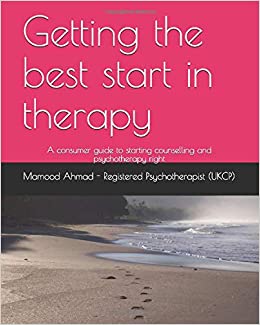
Getting the best start in therapy: A consumer guide to starting counselling and psychotherapy right by Mamood Ahmad

Taking the first step in contacting a counsellor can take a lot of courage. If you are someone who has not seen a counsellor before it can feel daunting. Let’s face it you’re going to talk to a stranger about how you’re feeling and you’re perhaps not coping; it’s not surprising if you’re feeling nervous, scared and perhaps uncertain about what to expect in counselling.

I recently discovered the book Getting the best start in therapy: A consumer guide to starting counselling and psychotherapy right by Mamood Ahmad.

The book is brilliantly written, brimming with content and easily accessible. Fantastic value too.

The book is aimed at consumers of therapy and therapists.

Ahmad addresses everything from what counselling is, how and why counselling works and how you can get the most out of counselling. If you’re looking to access counselling for the first time then this book is well worth a read.

To purchase your copy of ‘Getting the best start in therapy: A consumer guide to starting counselling and psychotherapy right’ by Mamood Ahmad click here.