Categories
Uncategorized

How to Deal with the Pressures of New Year Resolutions

27th December 2022

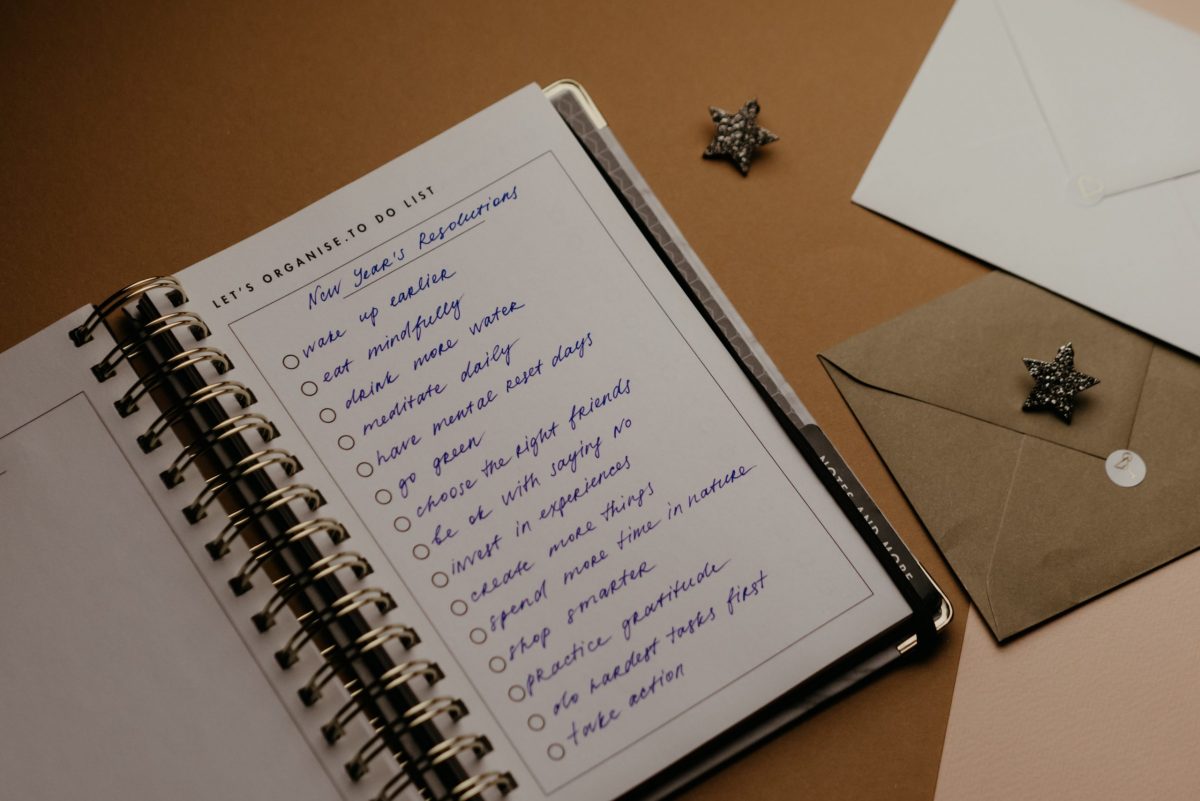
With the rush to get everything sorted for Christmas almost over, our attention usually turns to the New Year. This can often mean reflecting on the year that has just passed, taking stock, and making huge changes to our lives so 2023 will be bigger, brighter, happier and healthier. However, negatively reflecting on the past year, focusing on all your perceived failures, can put unnecessary pressure on yourself to make wholesale changes to your life from January 1st. This can create unnecessary anxiety, especially if you already struggle with your mental health.

While setting goals is a great way to achieve self-improvement, there is increasing pressure and competition to make bigger and better resolutions than the next person. However, people are more likely to not achieve goals set at the beginning of a New Year than at any other time of the year. So, are we just setting ourselves up for failure? And is there any need to put extra pressure on ourselves in this way, which can have a damaging impact on our self-esteem?

So here are a few simple pointers to help you get through the New Year without setting yourself up for failure, but still allowing you to focus on making meaningful changes to your life in 2023.

Be ready for change

One of the main problems with New Year’s Resolutions that can lead to disappointment and increased anxiety is the pressure to change at the beginning of the year, even if you’re not ready. We feel compelled to change our lives, just because the new year is beginning, even if we are not actually ready for change.
Change takes willpower, effort, and a desire to change. This may also require you to prepare for that change, whether that’s mentally prepare, or put things in place to help effect that change. If you are ready for change on January 1st, then that’s fine, but if you are not prepared for the changes you desire, try not to be pressurised by the approaching New Year. It may be a much better idea to prepare yourself mentally and physically before making any changes, which may mean starting later on in the year, so you stand more chance of actually achieving your goals.

Be specific

In the rush to come up with resolutions, you may be guilty of setting yourself vague goals that are difficult to achieve and even more difficult to measure. This can also increase your anxiety and mean that you are more likely to fail.

It’s a much better idea to be more specific about what you want to achieve, avoiding vague goals like eat more healthily or get fit. Try and set yourself manageable goals that you can track and work towards, so you can benefit from the feelings of fulfilment you get when you achieve certain milestones. This can also give you the opportunity to set more achievable goals as the year progresses.

For example, if you want to lose weight or eat more healthily, you may want to set yourself a small target weight that you want to lose at first or which foods you are going to cut from your diet until you achieve your goals. This way, you are still working towards your goals, you are more likely to achieve what you set out to accomplish and you will prevent yourself from feeling anxious.


If you are looking for personalised, sensitive anxiety counselling in Harrogate or online, feel free to get in touch and I’d be happy to answer any questions you might have.

Categories
Uncategorized

Honouring a Loved One at Christmas

13th December 2022

With Christmas upon us and the focus on spending time with friends and family, it can be particularly hard if you have lost a loved one. Being surrounded by all the joy and goodwill of Christmas can bring your feelings of grief to the surface and make it a really difficult time.

If you are feeling the weight of the empty space at the table and you are finding it hard to allow yourself to enjoy Christmas, finding ways to honour your loved ones at Christmas may help you cope with your grief and see Christmas as a time for fond memories and not painful ones. Here are a few ways to remember a loved one who is no longer with you at Christmas.

Memory Candle

Lighting a candle is a time-honoured way to pay your respects and remember someone who has passed. So, having a memory candle, either one you make yourself or one you buy that you light each year, can become a tradition and it may help you remember your loved one. Choose a scent that your loved one liked and make it one of your Christmas traditions, taking time to share memories about your loved one, or just having a quiet moment alone to remember them in your own way.

Favourite Recipes

Sitting down to Christmas dinner and thinking about the space at the table where your loved one is missing can be really painful. One way to help is to keep making their favourite recipes so you feel like they are still with you. Whether it’s their favourite stuffing or their brussels sprout recipe, preparing and serving their recipe may bring back happy memories for everyone and stimulate conversation about them.

Make a Memory Jar or Christmas Stocking

You and your family may have treasured memories of your loved one, so creating a memory jar or a Christmas stocking for them will give everyone a chance to remember your loved one and share memories with everyone. Place a Memory Jar under the tree and encourage people to write their memories on a piece of paper. On Christmas morning, open the jar, share the memories so you can all have some time when you remember your loved one. The same can be done with a Christmas stocking. Either way, it gives everyone the chance to share their own personal memories.

Make a Christmas Ornament or Tree Decoration

You could create a more personal object in memory of your loved one. Creating a Christmas ornament or a tree decoration that comes out every Christmas may help you remember your loved one and talk about them. You could use a photo, or their favourite colours and it’s the perfect way to make sure your loved one lives long in the memory.

Make a Memory Wreath

Another permanent memory object that you can bring out every year is a Christmas wreath. You can make this using photos of your loved one, their favourite colours and other keepsakes and then hang the wreath on your door. Again, this may help keep their memory alive and give everyone who visits a chance to share their own personal memories.

Keep their Favourite Traditions Alive

Family traditions are really important, and this is never truer than at Christmas. A great way to remember a loved one is to keep the traditions that they loved alive, year after year. This could be a favourite post lunch walk, a movie they loved to watch at Christmas, their favourite Christmas songs, or the order of the day. Whatever it is, it may give you and your family time to reflect and share happy memories of your loved one without it being too painful.

If you are looking for personalised, sensitive bereavement counselling in Harrogate or online, feel free to get in touch and I’d be happy to answer any questions you might have.

Categories
Uncategorized

How to Cope with the Disenfranchised Grief of Losing a Beloved Pet

28th November 2022

Disenfranchised grief is a term used to refer to grief that isn’t really acknowledged by the people around you or by society as a whole. Some people may think that the loss that you feel isn’t significant, and that your grief isn’t really valid. You may feel disenfranchised grief when you mourn the loss of a friend or work colleague, the death of an ex-partner, or the death of a beloved pet.

The death of a pet can be as distressing as losing a friend or family member. More and more, we consider our pets as part of the family, and we form strong bonds with our pets, they play an important role in our lives, so it is logical that when they die, your loss may have a profound effect on you. Sadly, some people consider that the death of your pet is not something that you should grieve over, or it should not take you long to get over their death, which can make your ability to come to terms with the loss that much harder.

People may also be dismissive if you are grieving the loss of a pet that they see as less significant, like a rabbit, or a hamster or a parrot. Again, this judgement by others can make it hard for you to accept your loss and feel that you are allowed to grieve.

How disenfranchised grief may affect you

You may feel more depressed or angry because you feel that your grief is not acceptable in the eyes of others, and that you should ‘get over it’. This may prevent you from expressing your emotions which are a key part of the grieving process.

When we lose a loved one, the rituals and ceremonies associated with death are a way for us to process our grief. They give us the opportunity to acknowledge the importance of that person in our lives, a way to say goodbye, but we don’t always do this publicly for our pets, preferring to do so with our close family. This means that the loss is private, and not accepted by society, which may make you feel that your loss isn’t as important.

How to cope with disenfranchised grief

There are a few things you can do to help you with the loss of a beloved pet so you can process your emotions and move forward with your life.

You must accept your grief as real and worthy of expressing. Allow yourself to feel sad and try to avoid just getting on with life and bottling up your emotions, not expressing them.

Find ways to acknowledge and honour the death of your pet, who has been an important part of your life. You have bonded with your pet, given them love and care, so it is only right that you should hold a ceremony to pay your respects. Having a symbolic farewell will help you come to terms with your loss.

Reach out to friends, family and the pet community, the people that know how much your pet meant to you, to share your feelings. Talk about your pet, your love for them and how you are feeling which will help you come to terms with your loss.

Make new traditions that will help you remember your pet, either through artwork, a photo collage or create memorable objects using something of theirs so you always have a reminder of how important they were to you.

If you are still struggling to come to terms with the loss of your pet, it may be helpful to talk to a professional who will help you explore your emotions and find ways to integrate your loss into your life in a more positive way.

If you are looking for personalised, sensitive bereavement counselling in Harrogate or online, feel free to get in touch and I’d be happy to answer any questions you might have.


Categories
Uncategorized

Anticipatory Grief – Dealing with Dementia Grief

15th November 2022

Grief is a universal process that we are all destined to go through at some point in our lives, involving a range of different emotions that we must make sense of if we are to integrate our loss into our lives. But anticipatory grief is different because it involves other emotions that you may find difficult to come to terms with.

Anticipatory grief is the process we go through when we are preparing for the death of a loved one. However, the grieving process can often begin while the person is still alive. This, in itself, makes grieving more problematic, involving a range of other emotions.

With dementia, the person you have known and loved slowly recedes from you, your family and their life, meaning that you essentially lose that person long before they actually die.

Dying two deaths

With the grief you experience when losing a loved one, it is clearly defined and comes as a result of a single, major loss. However, with anticipatory grief, it is often referred to as ‘dying two deaths’. The first death, the slow, psychological deterioration of your loved one, becoming less and less like themselves, as well as their actual death.

This can make the whole process more difficult to come to terms with, leaving you feeling anxious, angry or desperate over a longer period of time which can impact on your health and wellbeing, your job, your family life and your relationships.

Compounded loss

The other major difference with anticipatory grief is that it involves lots of smaller losses, which, over time, can leave you struggling with a range of emotions. Dementia, and this includes Alzheimer’s, is a slow progressive condition that slowly erodes at the faculties of the sufferer. Each loss of ability will feel like a little death. You may grieve their loss of memory, personality, awareness, their physical ability and their communication long before they actually die. You may grieve the loss of their companionship and it may even make you reflect on your sense of self.

As these losses usually take place over a much longer period of time, coping with the emotions involved can take its toll on your own mental health and you may find it even more difficult to cope.

How to cope with anticipatory grief

First, you must accept that it is normal to grieve before that person dies. There is no need to feel ashamed of the emotions you are feeling – it’s perfectly natural.

Be mindful to take care of yourself. Often, we throw ourselves into caring for our loved one, to the detriment of our own health and wellbeing. The best way you can be there for your loved one is to make sure you are eating healthily, sleeping well, and getting on with life as normal as far as it is possible.

Reach out for support. Whether that is from your family, a support group, respite care or professional counselling, it is important that you don’t try to cope with things alone. Having the opportunity to express the emotions that you are feeling is key to finding ways to better manage your grief.

If you are looking for personalised, sensitive bereavement counselling in Harrogate or online, feel free to get in touch and I’d be happy to answer any questions you might have.

Categories
Uncategorized

Understanding Anticipatory Grief

30th October 2022

We normally associate grief with coming to terms with losing a loved one after they have died. But if a loved one has received a terminal diagnosis, if they lose their independence or if they are entering hospice care, it is perfectly natural for you to begin grieving before the person has died. And although the responses you feel and the emotions you experience are very similar, grieving before someone who is about to die presents its own unique challenges.

How is anticipatory grief different?

The actual grief that you feel for someone who is about to die may not feel any different to those you feel after someone has died, but in many ways, it is completely unique.

Not everyone will experience anticipatory grief. For some, not acknowledging the feelings of grief can be a coping strategy to help them through a period of terminal illness before they die. It may help you cling to feelings of hope and get through the difficulties of coming to terms with a loved one dying of a terminal illness.
Living with the knowledge of a loved one’s impending death can leave you feeling conflicted. On one hand, you have the feelings of grief as you deal with the emotions of adjusting to life without them. On the other hand, you may be holding on to the hope that your loved one will recover. It is normal for you to move between these two contrasting states on a daily or even hourly basis.

How might you be affected by anticipatory grief?

One of the most difficult things to cope with about anticipatory grief is that you just can’t predict when your loved one will die. Everyone’s death is as unique as their life, and this can take days or years, so this makes it very hard for you to begin the process of letting go. This can take its toll on you, leaving you feeling emotionally and physically exhausted and drained.

You may also feel guilt because you are going through the process of grieving while that person is still alive. To some, it can feel like you are betraying your loved one because you are beginning to come to terms with life without them when they are still alive. This can also be draining but it is perfectly normal to feel conflicted.

You may find that you are living your life in a state of hyper vigilance – constantly on edge all the time, anxious and worried whenever the phone rings or you are due to visit. This can take a huge toll on you physically and emotionally and it can have an impact on your daily life and work, making you feel constantly distracted or preoccupied.

Time plays a significant role in anticipatory grief. While sudden death presents its own challenges, a long protracted death, where your feelings of dread are present for weeks, months or even years, can leave you feeling disconnected from your own life, unable to focus or make any plans for the future.


Summary

If you are experiencing feelings of anticipatory grief, it is important to understand that it is perfectly normal to feel anxious, worried and constantly on edge. It is also normal for you to begin processing your grief before your loved one has died, without worrying about feelings of guilt or betrayal. The most important thing is that you accept your emotions as part of the grieving process, and you don’t bottle those feelings up or suppress them.

If you are looking for personalised, sensitive bereavement counselling in Harrogate or online, feel free to get in touch and I’d be happy to answer any questions you might have.

Categories
Uncategorized

Spirituality and Grief

Death is a part of life, and it is something we will all experience in our lives. It is said that every death affects at least 5 people. How we process that loss has been the subject of many psychological discussions since Freud introduced grief into the psychological framework in 1917.

Since then, grief has been the subject of many studies and there is an abundance of theories about how best to process loss. However, most of the theories about grief tend to focus on the psychological, that is, how we make sense of our loss and how we can move forward with our lives. There is little focus on the importance of healing the spiritual self on the pathway to finding peace and acceptance. A more holistic approach is necessary if we are to come to terms with loss and move forward positively.

On spirituality

For many, spirituality implies religious faith. However, we should see spirituality as our connection with our world, our inner self and our core beliefs. Spirituality relates to our souls. It can be seen as looking for meaning in the deepest sense and looking in a way that is personal to us, and us alone.

Death of loss can seriously affect our beliefs and to truly heal, it is important to focus on the head and the heart. To accept loss and move on, we must look inside ourselves, exploring and perhaps even modifying our beliefs to adjust to our lives after loss. This may be particularly pertinent if a death was sudden or unexpected.

Striking a balance

For many, their faith offers them much solace when they are struggling with grief. A belief in the afterlife or a greater plan, plus the teachings, rituals and community of your chosen faith can offer much comfort and offer you a pathway to acceptance.

However, a balanced approach is necessary. We also need to look inwards, at both our psychological needs as well as our spiritual needs if we are to integrate loss into our lives moving forward.

Summary

To properly heal after loss, it is vital that we focus on our heads and how we can make sense of our grief and find ways to accept it and move on with it as part of our lives. But it is also vital that we look within, at our beliefs and connection with the world, finding ways to reconnect with our inner self and make adjustments, if necessary, so we can heal our hearts.

If you are looking for personalised, sensitive bereavement counselling in Harrogate or online, feel free to give me a call at any time and I’d be happy to answer any questions you might have.

Categories
Uncategorized

Five Quotes on Grief

5th October 2022

Grief is a perfectly natural and human response to loss. You shouldn’t punish yourself for grieving or feeling overwhelmed by sadness. We all need to process the loss as it can stir up all kinds of emotions, such as shock, disbelief, anger, guilt and sadness. We need to accept these feelings as part of the grieving process and work through them, knowing that time will dull the sharp edges of grief and our memories will be with us forever, providing comfort and happiness for the rest of our lives.

As a bereavement counsellor in Harrogate and online, I understand that coping with losing someone close to you is one of the hardest challenges you will ever face in life. But overcome it you will, and although life will be different, you will find a way to move past the grief that you are feeling right now.

Here are some quotes about grief for you to consider, to help you realise that even though you feel alone, grief is just part of life, and it touches everyone.

“Grieving doesn’t make you imperfect. It makes you human.” – Sarah Dressen

I love this simple quote as it reminds us to focus on the fact that grieving is part of the human condition. We are all destined to experience it in our lives, and it is a perfectly natural process to go through.

“We never lose our loved ones. They accompany us; they don’t disappear from our lives. We are merely in different rooms.” – Paulo Coelho

This quote, from novelist Paulo Coelho, is perfect because it makes us remember that the memory of a loved one lives on in us. We can spend time with them in our memories which we keep forever.

“The pain passes, but the beauty remains.” – Pierre Auguste Renoir

Another quote which reminds us that the sharp pain of grief will get easier over time and what remains are the happy memories of that person that we can treasure forever.

“Tears shed for another person are not a sign of weakness. They are a sign of a pure heart.” – Jose N Harris

Jose Harris, another author, reminds us that our grief is a symbol of the love that we had for that person, something to make us feel pride and not shame.

“Grief is like the ocean; it comes on waves ebbing and flowing. Sometimes the water is calm, and sometimes it is overwhelming. All we can do is learn to swim.” – Vicki Harrison

This quote reminds us that grief comes and goes and some days it will be easier to cope with grief than others. We must accept the process and find ways to make sense of our grief and move forward.

You might be struggling with a loss of some kind, or perhaps know someone who is grieving. If this is the case, I offer strictly confidential, friendly, personalised bereavement counselling in Harrogate or online. Feel free to give me a call whenever you like.

Categories
Uncategorized

Understanding Collective Grief After the Passing of Her Majesty Elizabeth II

The world has been shaken by news that Queen Elizabeth II, the United Kingdom’s Head of State and Monarch for 70 years, passed away peacefully in her Balmoral home on Thursday. Thousands have flocked to Buckingham Palace and her estate in Sandringham to pay respects to a woman adored across the globe, and there is without doubt a sense of disbelief in the air.

As a bereavement counsellor in Harrogate and online, I deal with the grief experienced on an individual or family level, but rarely is the subject of collective grief discussed. In many ways, it is a more complex phenomenon, because it is something experienced by everyone yet processed differently.

Some people, for instance, may not want to be part of the wider grieving process happening at the moment for whatever reason. They may be afraid to turn on a TV or radio, or look at their phone, for fear of coming into contact with this pandemic of grief on a regular basis. Others, however, may wish to grieve by leaning into the wider grief that is out there, watching videos, reading quotes, hearing stories. We will all experience this bereavement in a different way, which is always the case with grief, but when splayed out across an entire country, it can be especially jarring.

There are many examples of how a specific bereavement triggered nationwide – or even worldwide – grief. The September 11 terrorist attacks, for example, shook the entire world, altering the United States’ political landscape indefinitely. Princess Diana’s death was also a shock that deeply touched people in the UK and beyond. Cubans could hardly believe it when Fidel Castro died, such was the longevity of his time as father of the nation.

It will take some time to process such a powerful loss felt all over the world. In the case of the Queen, it felt like she was somehow eternal, that she would never die. Those feelings of disbelief are normal, and there are a range of painful emotions out there right now: shock, sadness, numbness, hopelessness.

However, collective grief, potentially more so than individual grief, can also be extremely empowering. While the individual may be alone in their grief, this bereavement that touched us all has brought a nation together, put us on the same page – something we can all relate to, regardless of country or kin. Collective grief may be difficult, but at least we experience it together.

If you are looking for personalised, sensitive bereavement counselling in Harrogate or online, feel free to give me a call at any time and I’d be happy to answer any questions you might have.

Categories
Uncategorized

The Difference Between Grief Reactions and Grief Responses

25th August 2022

When someone dies, or you lose something extremely important, we can’t control the way we react. Everyone experiences loss in their own unique way, and there’s no predicting how we’ll think, feel, and behave after the event – nor should we think there’s any right way to do it. During my time as a bereavement counsellor in Harrogate and online, I have seen how people often worry about the way they react to grief, or how others may view the way they’ve reacted to the death of a loved one.

How we behave after a death or another loss of some kind can be a subject of great anxiety and scrutiny, which is not helpful, because what happens following a bereavement is complicated, and generally misunderstood. Most people don’t realise that there is a considerable difference between how one reacts to their grief, and how someone responds to the death of a loved one.

In this blog post, then, we will further explore this important distinction between grief reactions and grief responses.


Grief Reactions

When something monumental happens to us, like someone dying, reactions are what happen as a result of that particular event. These reactions are instantaneous and instinctive; they are essentially uncontrollable, coming out as different kinds of thoughts, emotions, and behaviours that are often extremely painful. These reactions are totally normal; we quite literally can’t control them. People are often overwhelmed, or unable to properly express themselves. Some might close themselves off from everyone, demonstrate high levels of anger, or blame themselves relentlessly, ruminating on what’s happened over and over again.


Grief Responses

Once we have reacted to the death of a loved one in our own way, we ultimately embark on a more conscious, deliberate process that can be called a response. That knee-jerk reaction needs to happen, and serves as an important aspect of the grieving process, but the real healing comes with how we choose to respond to the bereavement that has recently happened.

Usually, we have to experience some pain before getting to this stage. A response should come from a place of compassion and curiosity after observing our reactions and seeing the impact they have on our lives. For instance, if you initially closed yourself off as a reaction to someone dying, a healthy response would be to gradually leave your comfort zone and reach out to people who you may not have spoken to for a little while. These responses aren’t always easy, but we do them for the benefit of our mental health.

If you are struggling with a recent bereavement and need help to process your reaction, or feel like you’d like benefit from some help understanding your response to the death of a loved one, I am here to deliver personalised, totally confidential bereavement counselling in Harrogate and online. Feel free to get in touch and ask any questions you might have.

Categories
Uncategorized

Understanding the Unique Challenges of Grief for Men

16th August 2022

Having worked with many men of all ages during my time as a bereavement counsellor in Harrogate, I know first-hand how difficult it can be for men to process someone dying or losing something particularly important to them. Despite the increase in awareness around men’s mental health in recent years, it is still unfortunately the case that men find it extremely difficult to properly open up – even to therapists like myself.


The grieving process is a deeply complicated, personal one, and this is especially the case for men who have always struggled to articulate their thoughts and feelings. The road to a better place can be long; often we don’t understand how best to help men on this journey. To increase awareness of men and the grieving process, this blog post looks at a couple of features of male grief that we should understand better.

Anger

Of course, anger is by no means exclusive to men, but this emotion does present itself often with men who have recently suffered a painful loss of some kind. It can seem, from the outside, that the man is just being unpleasant as a way of showing authority, gaining control over a situation.

The truth is that anger is far more complex than that. When we don’t have the words to articulate our true feelings, when we’ve never been given the space to vocalise how we genuinely feel, what ends up spilling out is anger. It is a sign that someone can’t put something into words, for whatever reason. Giving men the space to talk things through, in their own time and in their own way, is therefore very important.

Isolation

When it comes to male grief, an even more common phenomenon than anger is isolation. This problem extends far beyond bereavement; it is something that men struggle with the world over, compounding mental health issues like depression, low self-esteem, addiction, or anxiety.

There is a strong tendency among men to shut off their feelings and keep everyone at arm’s length. This is seen often within the context of the family unit, where the man has to “stay strong” for the rest of the family, at the expense of their own wellbeing. This becomes a pattern, where men automatically keep thoughts to themselves and become marooned on an island of their own repressed emotions, which ultimately spill out in some other way, such as addiction, violence, or even suicide.


If you are a man who has recently suffered a bereavement and feel alone with your emotions, or unable to express them, I am here to provide a space where you can explore these feelings at a time and pace that suits you. To learn more about my confidential bereavement counselling in Harrogate and online, please do get in touch via phone or email.